Thursday, April 30, 2009

Dan Onorato Foreshadowing County Secession?

Illyrias and Bram Reichbaum and Chris Briem, commenting on Dan Onorato's response to the Supreme Court decision requiring reassessment in Allegheny County, have caused me to begin to wonder whether Mr. Onorato is contemplating going "Rick Perry" on us -- secession.

Mr. Onorato, according to published reports of his reaction to the court's ruling, 'repeated his vow' to refrain from reassessment and indicated he would not "just roll over and do something that will raise the property taxes of 1.3 million people." (For those who lack Mr. Onorato's law degree, "just roll over" is a technical legal term meaning "comply with a court order.")

Some intellectually fastidious observers might focus on the lack of logical correlation between reassessment and increased property taxes, but after three or four decades of nonsense and doubletalk this is no time to attempt to introduce logic or honest debate to local government.

Instead, let's focus on the 'vow not to reassess' and "just roll over" parts: The County Executive seems to be indicating that he will not recognize the authority of the Supreme Court of Pennsylvania, whose decision "requires" reassessment. This defiance doesn't strike me as off-the-cuff loose talk. Mr. Onorato, a lawyer, has known from the moment he filed the appeal that this result -- unanimous decision rejecting the county's position -- would almost surely arrive.

What would secession mean for the region? Mr. Onorato is not as close to Gov. Rendell or President Obama as many people (including Mr. Onorato) believe, so I don't expect the Pennsylvania National Guard or federal troops to take up arms on county government's behalf. Instead, the county would be forced to go it alone in defying the Commonwealth's Supreme Court.

Which could explain several other items, including the curious alliance with the boy mayor and the announcement concerning recent upgrades in local tactical weaponry.

The City Has A Paper, After All -- The City Paper

A strange confluence of events -- a divorce featuring hookers and arrests and billions of dollars, one newspaper published by a participant in the divorce, another newspaper curiously inactive, a weak judge -- has led to a remarkable circumstance in the Court of Common Pleas of Allegheny County in recent years: a court proceeding so shrouded that the public has been forbidden to see the court order declaring that the public can not know the events in a public courtroom.

The Pittsburgh City Paper, low on resources and competition, is valiantly attempting -- with the able assistance of Vic Walczak (left) and Sara Rose of the American Civil Liberties Union -- to force sunshine into the courtroom of Judge Alan Hertzberg, venue of the divorce litigation involving Richard Scaife.

The City Paper has asked Judge Hertzberg to open the courtroom and to unseal the docket (the formal record of documents maintained by the court clerk). After yesterday's hearing, Chris Potter reports small but unprecedented progress: The judge permitted the public to attend the hearing concerning a request to unseal the docket, despite vehement objections from the divorcing couple's lawyers.

Pittsburgh is lucky to have the City Paper, the City Paper is lucky to have the ACLU, and the Scaifes are fortunate to have gotten this far in their effort to conduct secret litigation in a public courtroom.

Wednesday, April 29, 2009

Allegheny County's Inaccurate Assessments Violate State Constitution, Supreme Court Rules

The Supreme Court of Pennsylvania today ruled that the inaccurate and unfair property tax assessments Allegheny County's elected officials have been defending for years are so egregious that they violate the Uniformity Clause of the Commonwealth's Constitution:

Uniformity of Taxation
Section 1.
All taxes shall be uniform, upon the same class of subjects, within the territorial limits of the authority levying the tax, and shall be levied and collected under general laws.
The Supreme Court had three practical choices:
1) permit Allegheny County's current application of the "base year" system -- a system designed to rely on stale assessments -- to stand;
(2) prohibit the "base year" system and require every county to reassess regularly; or
(3) reject the "base year" system not as a concept but rather "as applied" by Allegheny County.

The justices -- by unanimous smackdown -- selected Curtain No. 3, sending the case back to county Judge R. Stanton "Told You So" Wettick (left), who has signaled his inclination to order a prompt and comprehensive reassessment. The Supreme Court's ruling -- practical, politic and just -- avoids simultaneous infuriation of every county in the Commonwealth while vindicating the rights of Allegheny County's property owners and renters. Justice Baer, in a concurring opinion, outlined a likely roadmap to practical application of the decision announced today.

County Executive Dan Onorato immediately displayed the mixture of defiance, poor judgment and indifference to morality that has marked his handling of the assessment issue for too many years -- and the quality of legal reasoning that produced the torture memos -- by declaring he found "enough room" in the decision to support a conclusion that the decision does not require a reassessment.

"I'm in my sixth year as county executive and we haven't done a reassessment yet," the county executive (and would-be governor) inexplicably boasted. The conclusion to be drawn from such a statement by a litigant is that Mr. Onorato must assume Judge Wettick does not read the Post-Gazette.

This decision is good news for owners of modest properties and those who favor justice, bad news for property owners in affluent communities and those who had been able to arrange remarkably favorable assessments, and perhaps the first hit of a one-two punch (the drink tax decision is pending) unlikely to improve Mr. Onorato's gubernatorial prospects.

Tuesday, April 28, 2009

Sen. Arlen Specter, Democrat of Pennsylvania

Nice ring to that one.
Democrats gained a substantial edge in the general election today.
Republicans, meanwhile, can enjoy a small party.

Literally.

(Cartogram, right)

Monday, April 27, 2009

Phil Spector's Wall of (Un)Sound

You know that new-fangled device that sends your photograph through the Intertubes, turning you into a Simpsons character?


Phil Spector doesn't need it.

Sunday, April 26, 2009

District Attorney Misfires In Poplawski's Case, But Benefits From Luck Of The Judicial Draw

Dimitri Vassilaros was castigating Richard Poplawski's public defender, Lisa Middleman (left), by radiowave the other day for objecting to publicized comments (some by the district attorney, others by members of the victim's families) that, Ms. Middleman argued, violated a "gag order" designed to preserve a jury pool.

If I recall the broadcast correctly, Mr. Vassilaros approvingly quoted the district attorney's office labeling as "nonsense" Ms. Middleman's motion, which objected to this public statement from the D.A.s office:

"Our investigation of both the evidence and the background of the defendant has produced several compelling, aggravating circumstances with respect to seeking the death penalty," Mr. Manko said. "As of now, there are no mitigating circumstances. Consequently, our office will be seeking the death penalty."
I agree with Mr. Vassilaros' contention that Ms. Middleman's jab at victims' family members was a stretch (although I doubt his prediction that it will disadvantage Mr. Poplawski at trial), but not with his condemnation of the attempt to keep the D.A. in line.

Deputy D.A. Mark Tranquilli mocked the motion, claiming "it doesn't take a brain surgeon to figure out that the circumstances in this case are compelling."

Speaking of brain surgeons, the D.A.'s office might benefit from consulting someone with a medical degree, because the law degrees in that office apparently could use some help. Next time, the D.A.'s office might not catch a couple of lucky breaks in the courtroom, and might even be held accountable for imprudent conduct.

D.A. Stephen Zappala's first mistake was to authorize the statement concerning his conclusions with respect to aggravating and mitigating factors. His second mistake was to send a deputy to the sanctions hearing. He skated on both mistakes, which I ascribe primarily to the schedule of Judge Jeffrey Manning, who was unavailable for the hearing (vacation, I hear). Instead, the parties drew Judge David Cashman.

Judge Cashman's demeanor -- easy-going conciliator -- differs from the more confrontational nature of Judge Manning, whose background was in the more binary world of criminal law ("ding 'em or fling 'em").

Judge Manning, as author of the order, also might have felt more secure footing in gauging and enforcing the contours of the order's intent -- such as whether an attorney involved with the Poplawski prosecution should "discuss the broader public safety issues rather than the particulars of the case."

I would have expected Judge Manning to handle at least two aspects of the hearing differently. First, when he observed that D.A. Zappala had sent an underling to the hearing, Judge Manning likely would have ordered the D.A. to appear before the bench in person and in minutes. Second, I doubt Judge Manning would have waved off the D.A.'s public statements concerning strength and nature of evidence so breezily as did Judge Cashman ("I think the statements . . . do nothing more than describe the structure of the case").

Judge Cashman ruled within the bounds of reason, but his involvement appears to have magnified substantially the home field advantage the D.A. possesses in essentially every court proceeding. The D.A.'s office should consider itself more lucky than vindicated.

Saturday, April 25, 2009

Name A Bridge After Tom Murphy? Great Idea!! I Nominate The Perfect Bridge For This Honor

Chris Briem, at Null Space (via Return to Pittsburgh), points to a couple of articles in which someone who thinks highly of Tom Murphy (apparently, crossing the U.S. border creates enough distance to permit such thoughts) offers a glowing depiction of the former mayor who did his damnedest to put the "pit" in Pittsburgh.

Chris even exhumes a remarkable proposal to name the Hot Metal Bridge for Tom Murphy. That strikes me as a crackerjack idea, every bit as good as betting the mortgage on the Pirates to win this year's Series, or planning a big shopping trip to the downtown Lazarus (with a convenient stop at the nearby Lord & Taylor), or working on a spending plan for all of the tax revenue generated by the Fifth-Forbes project.

Those familiar with Murphy's terms as mayor will understand (with a wince) those references.

Murphy set the foundation for the worst sustained futility in the American history of major professional sports when he (a) tried to steer the Pirates to felon John Rigas (right, with federal marshal, more to the right), (b) shunning more than one first-rate bidder, and was consequently (c) forced to settle for the greedy, inept ownership group of Kevin McClatchy. Murphy compounded the failure by devoting hundreds of millions of dollars to North Side stadiums and parking lots, enriching the Rooneys and McClatchy's partnership while wasting scarce land. The result of that investment? A Pirates team with a lesser record, a smaller payroll and less attendance than was the case at Three Rivers Stadium. Plus a huge football field, used for roughly 20 games and a few concerts over the course of a year, on some of the most important land in a 100-mile radius.

Sixteen straight years of losing, illusory development, a nine-figure giveaway -- sound like a disaster? Not by the standards of Tom Murphy.

Murphy spent millions of public dollars to build a Lazarus department store, then bastardized a majestic historic building (an original Mellon Bank) to accommodate Lord & Taylor. Both stores failed spectacularly and closed quickly, leaving glaring symbols of failure at downtown Pittsburgh's heart.

Fifth-Forbes was a half-baked plan, hatched in secrecy and planned to batter its way past any dissent or analysis, to grab entire blocks of downtown Pittsburgh by eminent domain, raze the buildings piecemeal, and hand the entire area to a no-bid developer whose plans were pathetic. Longtime businesses were to be displaced, in many cases for similar businesses operated by acquaintances of the out-of-town developer. Residential development was not part of the plan, but a series of luxury stores was. The plan was derailed by a civic-minded alliance of downtown property owners, historical architecture advocates, and persons with average-or-above intelligence.

That is a mere summary of Tom Murphy's lasting impact on the City of Pittsburgh -- there is plenty more where that came from -- but even this brief list of highlights is enough to cause me to endorse the proposal to rename a bridge for Tom "Tantrum" Murphy. I not only second the motion but indeed request expedited consideration -- because, given the bridge that would be the most fitting symbol of Tom Murphy's legacy, this is an idea whose time not only has come . . . but probably can't wait much longer.

Davis Avenue Bridge, I dub thee the Tom Murphy Bridge.

Thursday, April 23, 2009

Doctoring For Dollars: West Penn Health Aims Blockbuster Claims At UPMC, Highmark

Among the quirks of the Pittsburgh region are the lack of taxis, the belief that a hamburger can properly be labeled a cheesesteak, and the strange domination of the University of Pittsburgh Medical Center over the region's health care industry, the local economy and even the university from which it took (literally) its name.

While the national chatter addresses the issue of "too big to fail," in Pittsburgh the issue has been settled for several years: UPMC is Too Big To Criticize. Politicians fear, serve and are funded by UPMC. Publishers and broadcasters are far too busy cashing checks for UPMC "image" advertisements (left) to spend any time questioning anything about UPMC's rise and reign. The University of Pittsburgh has been UPMC's plaything for many years. Large employers might chafe against UPMC's charges but enthusastically refrain from offending the only entity that rivals the Rooneys among Pittsburgh's royalty. (In legal and medical circles, some mumble about the openness of UPMC's conduct, and the legal issues associated with it, but only after checking the room to ensure that no one who might call Mr. Romoff is able to hear.) Highmark, ostensibly a competitor, has been UPMC's bitch for years.

Which makes the West Penn Allegheny Health System's recent filing of a major-league antitrust complaint against UPMC and Highmark fascinating. The details -- a claim that Highmark's chair acknowledged that UPMC-Highmark collaboration has been "probably illegal," a depiction of UPMC declaring an intent to turn Allegheny General Hospital (right) into a "parking lot," an allegation that an internal UPMC analysis showed that some of UPMC's conduct made no business sense outside the context of eliminating competition -- can be viewed as scattered points over a number of years, but most of them strike me as amply believable, and they might provide enough radioactive material for a legal detonation.

Perhaps there are explanations (other than a UPMC-Highmark conspiracy plausibly pinpointed in 2002) for Highmark's treatment of West Penn, for the inability of other health insurers to find traction in Western Pennsylvania, for the seemingly inexplicable attempt to raid every anaesthesiologist employed by West Penn.

This complaint might make Pitt chancellor Mark Nordenberg uncomfortable, however, and perhaps even cause him to rethink the Pitt-UPMC relationship (which appears decidedly slanted toward UPMC's favor). This complaint should cause the region's decision-makers to wonder whether UPMC is good or bad for the region. Those responsible for monitoring qualification for tax-exempt status could reasonably wonder whether UPMC operates "for the public good."

Nothing has been proven. So far, we have a one-sided argument (that seems congruent with years of whispering about town) that is entirely untested. But people should watch this one develop, and many familiar with the underlying circumstances will need no encouragement to do so.

Tuesday, April 21, 2009

I Like DeJuan Blair ... So This Makes Me Nervous

The Post-Gazette reports that former Pitt basketball star DeJuan Blair has ditched his original lawyer-merchandiser and hired Happy Walters as his agent. This story, and the related context, generates several concerns:

First, that is a worrisome volume of strange activity for a young man (big man on the court, but a sophomore nonetheless) who has not yet been drafted.

Second, Blair appears to have refrained from seeking -- let alone heeding -- advice from his coaches, NBA insiders, or anyone else who has the appropriate experience and/or cares about him. Instead, he reportedly sized up his draft prospects by surfing the Internet and relied on a teammate for pointers on the agent market.

Third, and perhaps the most important, the "NBA agent Happy Walters" reported to have been engaged by Blair might be this Happy Walters

Cypress Hill and House Of Pain mamanger, Happy Walters was engaged in a shouting stand off with Suge Knight over politics on a soundtrack appearance. A few days after the altercation while withdrawing money from an ATM, Happy disappeared off the scene sending shock waves through the music industry as to his circumstances, however he reappeared several days later wandering the streets incoherent, shaved down, naked and covered in cigarette burns. When admitted to hospital he had amnesia and refused to comment on Suge Knight.


and/or this Happy Walters

IRON MAIDEN manager Rod Smallwood and SLAYER manager Rick Sales (both of whom work under the Sanctuary umbrella) were involved in a fistfight with record executive Happy Walters at the BMG Grammy party over the weekend. . . . Hits Daily Double apparently received an "open letter" from Smallwood addressing the incident. Said Smallwood: "I resent any implication that I am the type of person to get involved in 'brawls' at Grammy events or elsewhere, so let me make this clear. A group of us were chatting on the way out of the BMG party when Happy Walters stormed up and headbutted a Sanctuary Executive, Prem Akkaraju. Where I come from, headbutting is considered to be a vicious and cowardly act. I immediately stepped in to restrain Happy Walters from making further attacks on Prem Akkaraju. Happy Walters was shown out by security.


(I am still searching for the article reflecting Happy Walters' successful guidance of a non-prototype player through the draft and into a huge, first-round NBA contract. If anyone has it, please post it.)

Several doors have slammed behind DeJuan Blair recently (he jumped the gun unnecessarily on forfeiting eligibility), and he has made some dubious decisions (he is on his second set of professional advisors two weeks into a professional career that hasn't even started yet), but his future is still open and bright, with an unusually wide range of outcome. For that reason, I offer DeJuan Blair advice:

Go to people with Pitt connections -- you can't help them anymore, but they can help you -- who are familiar with the unforgiving world of professional basketball. Talk with Jamie Dixon, Tim Grgurich (upper right), Bob Hill, Billy Knight (left). Also, talk with Dave Wannestadt, Jimmie Johnson, Foge Fazio, Tony Dorsett, Jackie Sherrill (who helped the DeJuan Blair of the 1980s, Sam Clancy, another non-prototype NBA prospect, arrange the transition to successful professional football player). Perhaps most apt, check with Sam Clancy (lower right), who resembled you as a Pitt player from the City League, made a fine living in more than a decade of NFL football, and had a son chosen in the first round of the NBA draft recently. One of the best guys you will ever meet.

Also, find a top-flight lawyer. Not the kind of guy who has more "specialties" than can fit on a page. Not the kind of guy who signs contracts on the hoods of cars. A first-rate lawyer.

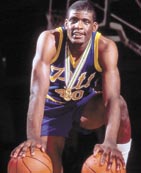
Ask these people for advice, and consider it carefully. If you play your cards right, you could emulate Charles Barkley or Antonio Gates or Wes Unseld or Sam Clancy. If you continue to play like the fish at a big-time poker game, however, you could wind up in Melvin Bennett's shoes. Mel Bennett, right, starred for Peabody in Pittsburgh's City League, then had a brief man-child stint with the Panthers -- so memorable he has a place on the Pitt Basketball All-Centennial Team despite having spent just his freshman season in Oakland. Bennett, relying on agents' bullshit, left Pitt early and squandered his chance at a solid NBA career (and payday). It is time to step away from that path, DeJuan.

No one can fault you much for a couple of missteps so far. You are a college sophomore without a background in legal and business matters; you don't know whom to trust; you are surrounded by jackals. But you need to find reliable advisors, and to start making appropriate decisions, without delay.

UPDATE: I do not intend to imply that Mel Bennett is living in a refrigerator box somewhere. Last I heard, he was coaching high school basketball. But he never reached his expected level of play or earnings in professional basketball, and I have always ascribed that to a bad decision to leave college after his freshman season.

District Attorney: Give Him Death

The District Attorney has announced that the prosecution will propose the death penalty for Richard Poplawski, the Jew- and Obama-hating gun nut from an complete clustermuck of a family (well, not complete but close to it, especially if you consider his friends part of the mix) who killed three police officers in Stanton Heights in early April.

The District Attorney's position is reasonable, although I disagree -- not because Mr. Poplawski deserves to live, not because of the cost (millions of dollars, plus extended anguish for survivors) of every death penalty prosecution, not because I care about his mother's feelings (or even his grandmother's feelings), but instead because humans are not capable of devising or implementing a death penalty system with adequate safeguards against condemning and killing the innocent.

We Interrupt This Blog . . .


. . . for a very important public service announcement.

Monday, April 20, 2009

Mayoral Debate Offers Scant Hope

The mayoral debate was illuminative, which is more bad news for Pittsburgh (the city and, therefore, the region).

Carmen Robinson appears to be a well-educated, well-meaning, articulate, experienced (law and police), sensible person motivated to contribute to her community. Which means she has nearly no chance of getting within a mile of Pittsburgh's City Hall, so her relative lack of polish is not worth worry.

Patrick Dowd appears to be a highly educated, community-minded, exceptionally articulate and thoughful person with a strong desire to improve his community. Which means he is substantially handicapped in any election among the diluted gene pool of the remaining City of Pittsburgh electorate.

Luke Ravenstahl is, without doubt, the people's choice (if the people are the members of the City Democratic Committee, those who care more about the Steelers draft than about their children's prospects for college, and those whose livelihoods depend on city contracts and variances). Mayor Ravenstahl is becoming less awkward in public speech, but no less hapless with concepts of even modest complexity.

He referred to Iron City Brewing -- whose latest iteration of heavily subsidized, inadequate management was the beneficiary of millions of dollars in public assistance from the Ravenstahl administration just before it was caught outsourcing jobs to Rochester -- as one of the two economic success stories he could think of. His decision to use forgiveness of Water and Sewer Authority debts to prop up failed management (and deny a Pittsburgh icon a chance at a fresh start) likely doomed the brewery. (For a quantified assessment of the wisdom of the mayor's investment of public funds in Iron City Brewing, check the Propositions Board, right).

He crowed about Pittsburgh's "most livable" label without mentioning -- probably because he couldn't recognize the point on pain of losing beer privileges at Steelers games -- that the portions of the metropolitan area that earn the award are the Upper St. Clairs, Franklin Parks, Fox Chapels, Hamptons and Sewickleys (good schools, effective government, nice houses at nice prices courtesy of a moribund local economy). There might be four or five city neighborhoods that aren't leaden drags on the region's "most livable" calculations . . . or there might not be that many.

The mayor also boasted about the city's fiscal trajectory (a tailspin), the Pittsburgh Promise (unfunded and an impediment to collecting from "not-for-profit" entities) and city government's commitment to public safety (strange, so soon after the Stanton Heights tragedy illustrated the consequences of years of shortchanged training and equipment for police officers).

Some debate-point-scorers might survey the details and conclude that the mayor stumbled severely, but across a dying city the City Democratic Committee members exchanged properly confident high-fives concerning their endorsed candidate . . . the leeches who fund city campaigns smiled and nodded smugly concerning the security of their investments . . . and city voters continued their March of the Penguins Fans toward a straight-ticket walk for Mayor Ravenstahl.

The Propositions Board


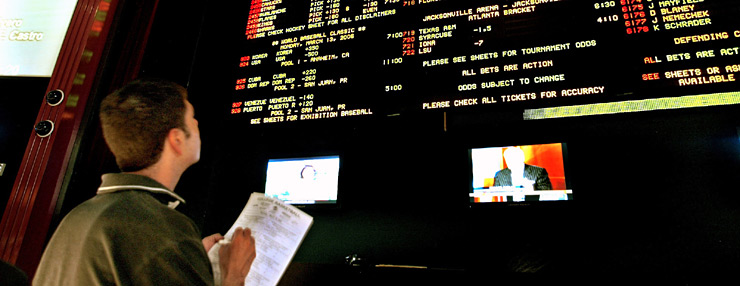
Pittsburgh may be about to get a slots parlor, but it won't be a casino without blackjack tables, complimentary watered-down drinks (as described by Bill "Barred" Blazejowski) (right), and, most important, a comprehensive sports book with a huge tote board.

As a public service (offered without demand for a cut-rate, no-bid casino license, an enormous and counterproductive public subsidy or even a variance for a vista-wrecking jumbotron), Infinonymous introduces the Propositions Board, a tote board identifying a series of propositions, with odds.

Propositions regarding elections, endorsements, sports events and the like will be posted as adjudged appropriate by the management. Special propositions will be posted periodically.

Sunday, April 19, 2009

Time To Put PAT Out Of Our Misery

A Port Authority radio commercial has finally convinced me that the authority should be dismantled.

I distinguish the Port Authority -- as comprehensive a failure as exists in a region nearly wrecked by bad government -- from public transit. I see public transit as an unadulterated good -- good for everyone, essential for those who lack automobiles -- particularly in a region whose downtown is constrained by rivers and bridges. This is one of the reasons I despise PAT and wish to see it destroyed.

The Port Authority has been mismanaged at every level -- by elected officials who botched strategy and appointed talentless hacks to the board; by boards overrun by conflicted and distracted (did I mention talentless?) hacks; by management that enriched itself while capsizing the transit system. Absurd employment contracts have plotted an unsustainable trajectory. PAT's day-to-day operations are as expensive as they are substandard.

But even against that backdrop of daily incompetence and decades of strategic failure, the radio commercial stood out. The Port Authority is digging a pointless hole underneath the Allegheny River. The cost of that hole is staggering -- hundreds of millions of dollars. The decision to build that hole was so misguided that its parents abandoned it long ago and can no longer be found (at least, not by Pittsburgh's standards of journalism). The opportunity costs -- a spur to Oakland, or a line along I-279 North, to the Alle-Kiski Valley, or to the airport, or even a fiscally sound transit system -- are heartbreaking. The dig created employment (as would have a hole aimed straight down until funding was exhausted, with similar practical results). That effort and money could have been directed more fruitfully in nearly countless other directions.

Every citizen of this region knows the project has been a debacle; PAT should be searching for ways to grovel and apologize in a proper manner. Instead, to my astonishment, PAT has been buying radio commercials to tout the tunnel. It actually boasts about how -- even if you never use the damned thing, even if you don't understand the point of it, even if it wasted resources this region needs desperately -- everyone has to admit the tunnel is cool.

I nearly drove off the highway. Cool? PAT is bragging about the tunnel? With commercials funded by public money? Everyone involved in the decision to broadcast that commercial should resign immediately, or be fired by the end of the day.

That commercial crystallized my thinking. PAT must be killed. After substantial consideration, I reject placing the entire board, most of the management staff and many of the employees in that tunnel before sealing both ends. But I believe it to be imperative that the authority be closed and a successor approach to public transportation created in its wake, so that mass transit might have a chance to succeed in Allegheny County. Now that would be cool.

Ravenstahl Gets One Right

I no longer recall where, but I read a blog comment criticizing Mayor Ravenstahl for his handling of the Stanton Heights tragedy. The mayor's public handling of this situation struck me as appropriate, to the point of mildly supporting the argument of those who assert that the mayor, at least to some degree, is improving.

UPDATE: I now recall where I read the comment. I'm not accustomed to comments yet.